
Recently, STMC carried out a cryogenic deflashing process test on injection-molded hollow skeleton parts made of PA66 nylon. By adopting the cryogenic principle and spraying rubber-plastic pellets, the machine automatically removes flash and burrs from precision injection parts. The test verifies the excellent deflashing performance of STMC cryogenic deflashing machines for complex structural workpieces of PA66 engineering plastics.
PA66 (Nylon 66) is a widely used engineering plastic for automotive components, electronic insulation parts, bearing retainers and precision structural components. It features high toughness and rigidity. Flash is easily generated on ribs, hollow grooves and parting lines after injection molding. For such hollow cage-shaped skeleton parts with intricate structures, traditional manual trimming or knife punching has obvious drawbacks: burrs inside hollows are hard to clean, the product substrate is prone to scratches, productivity is low, and yield stability is poor, failing to meet the high-quality requirements of mass precision injection production.
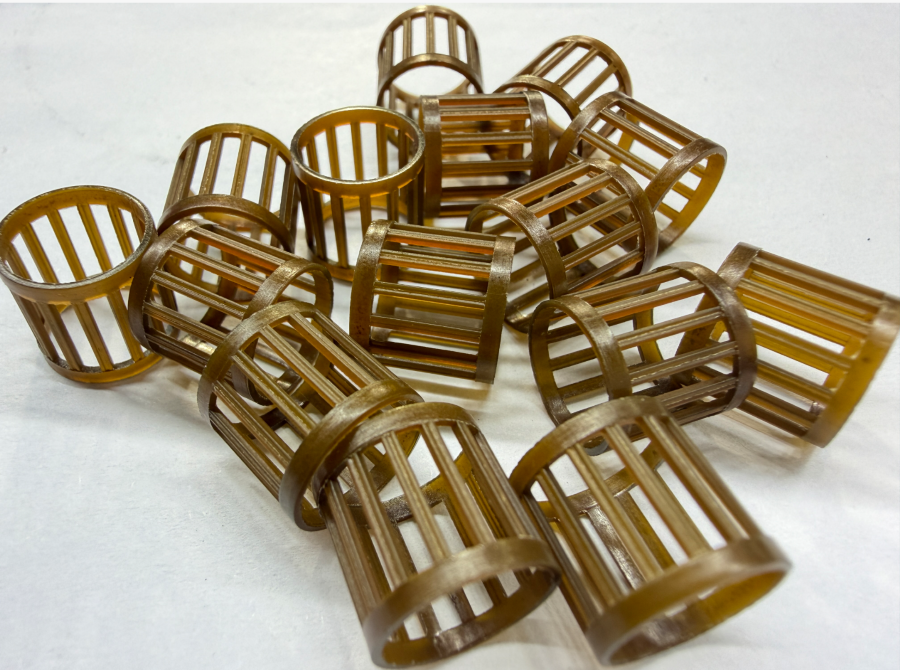
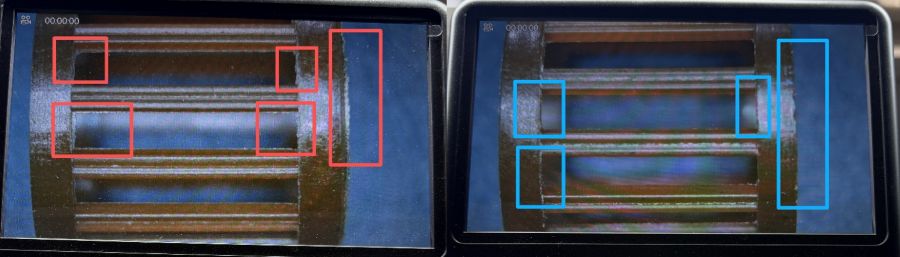
The sample tested in this trial is a hollow cage-type PA66 retainer skeleton. It has multiple ribs and narrow inner spaces, with parting-line burrs distributed at groove openings and frame joints. Before cryogenic deflashing: Continuous injection flash and fine burrs exist on parting surfaces and root parts of hollow grooves, attached to the edges of ribs. Flash can be clearly observed under microscopic inspection, which directly affects assembly clearance and service performance. After cryogenic deflashing: Microscopic comparison shows that burrs and flash on parting lines and grooves are completely removed with no residue. The outline and rib surface of the workpiece remain intact, without whitening, chipping or scratching caused by impact. Product dimensions and integrity are fully guaranteed.
STMC cryogenic deflashing machines work on the principle of low-temperature embrittlement. Workpieces are cooled down to the embrittlement temperature, then high-speed pellets impact to peel thin flash hidden on parting surfaces, clamping gaps and blind corners of hollow structures. The equipment is compatible with deflashing of PA6, PA66, PBT, POM, fluororubber, silicone, TPU and other rubber, engineering plastic and elastomer parts.
Core advantages:
✅ Suitable for complex hollow, deep-groove and thin-wall precision injection parts, capable of removing burrs in dead corners
✅ Non-contact deflashing, no damage to base material, without changing product appearance and dimensions
✅ Automatic continuous operation, replacing manual trimming to cut labor costs and ensure stable batch quality
✅ Clean process, dust-free and no secondary pollution, meeting cleanliness standards of automotive, electronics and new energy industries
This process is widely applied to automotive engineering plastic parts, bearing retainers, electronic insulation structural parts, connector skeletons, hydraulic sealing plastic parts, home appliance precision injection parts and other sectors. It serves as a preferred automated post-processing solution for precision rubber and plastic injection molding. STMC keeps exploring cryogenic deflashing technologies. We provide customized deflashing solutions for various nylon grades, glass-fiber reinforced engineering plastics and rubber products, helping rubber and plastic manufacturers reduce costs, improve efficiency and strengthen market competitiveness.
Post time: Nov-13-2026


